Interview Anxiety or Just Nerves? How to Tell the Difference
Am I Dealing With Interview Anxiety, or Just Normal Nerves?
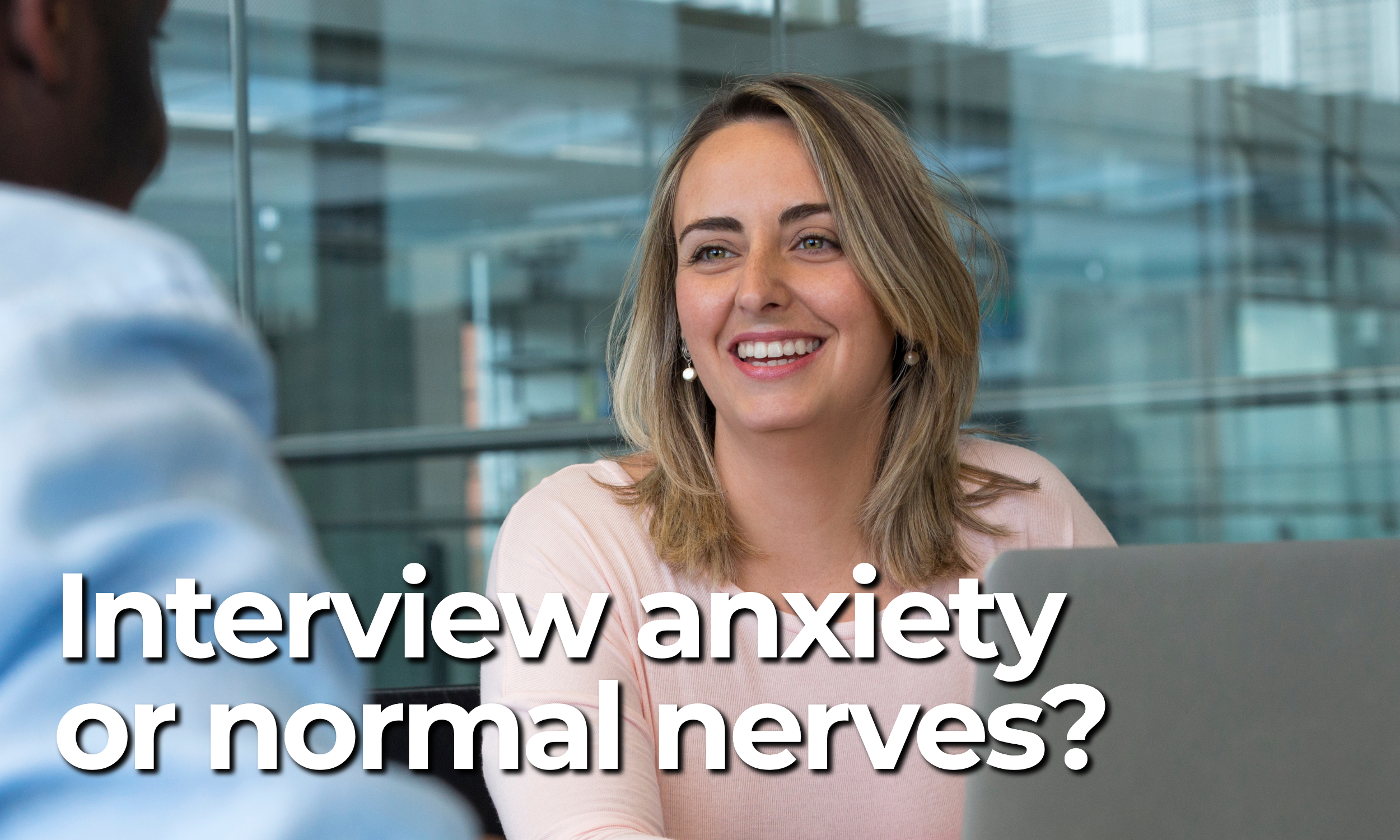
You know the material cold. You've rehearsed your answers in the mirror, in the shower, in the car on the way there. And then the interview actually starts, and something takes over: your mind blanks on a question you could answer in your sleep, your voice does that shaky thing, or you're three minutes into an answer with no idea how to land the plane.
Afterward, you replay the whole thing. Was that just nerves, the kind everyone gets? Or is this a pattern – one that shows up interview after interview, no matter how ready you actually are? If you've ever typed "why do I freeze in interviews" into Google at 11pm after a rough one, you're not alone.
The difference matters more than it seems. The two call for very different responses. One tends to settle once you're a few minutes in. The other usually doesn't, and it can quietly cost you roles you were genuinely qualified for. That's really the whole distinction behind interview anxiety vs. nerves, so here's how to tell which one you're dealing with.
What is Normal Interview Nervousness?
Some nervousness before a big conversation like this is normal, and honestly kind of healthy. It's not something to fix. It's really just your brain asking a reasonable question: will I represent myself well here? And it tends to fade fast, usually within the first few minutes, once the interview starts to feel more like a conversation and less like a test. Normal nerves can even work in your favour. They're often exactly what got you to prepare in the first place.
The more important question is whether you can recover from the stress once the pressure passes.
What is Interview Anxiety?
Interview anxiety is something different: more specific, and a lot more disruptive. It's what happens when the shift Amanda describes on her clinic page sets in: “you're qualified and prepared, and yet when the interview starts, something shifts. You freeze, ramble, your body reacts in ways that feel hard to control.” That's not a lack of ability talking. It's your nervous system doing what nervous systems do under evaluation, and it's a well-documented pattern. A growing body of psychological research backs this up: interview anxiety and interview performance are negatively related, largely independent of how prepared or qualified the candidate actually is.
Does it Fade or Does it Take Over?
The clearest test isn't how nervous you feel walking in the door. It's what happens once the interview actually starts. Does the nervousness settle as you go, or does it take over the room?
| Normal interview nerves | Interview anxiety |
|---|---|
| Butterflies before you walk in, settles once you start talking | Persists, or even builds, once the interview is underway |
| You can think clearly and access what you know once you're a few minutes in | Mind goes blank or you talk in circles, even on familiar material |
| Preparation resolves most of it | Happens across interviews, even ones you're clearly qualified for |
| How nervous you feel roughly matches how much this particular interview means to you | Your body reacts in ways that feel outside your control — racing heart, shaky voice, rambling |
Signs It Might Be More Than Nerves
A few interview anxiety symptoms worth keeping an eye on:
You're actively applying for jobs but dread the interview itself more than the outcome
You've avoided applying to roles because of how you know you'll perform in the interview, not because you're unqualified
Racing thoughts, blanking, or panic overwhelm you mid-interview
You've made it to final rounds and then underperformed relative to what you actually know
Your voice shakes or you talk in circles, and it's happened more than once
Preparation hasn't fixed it. You know the material, but the moment still doesn't go the way you'd expect
Why The Difference Matters
Normal nerves usually aren't costing you much. They resolve once you're a few minutes into the conversation, and that's that. Interview anxiety is different. It can override preparation entirely, no matter how many mock interviews you've run. Research on interviewee nonverbal behaviour backs this up too: visible anxiety actually lowers how competent a candidate is perceived to be, independent of what they're actually saying. Which means the anxiety itself, not any real skill gap, can be what costs someone the role. Left unaddressed, that tends to show up as applications you talk yourself out of, rounds you underperform in despite knowing your stuff, and a growing gap between how qualified you are on paper and how you come across in the room.
The good news? Because it's a pattern and not a fixed trait, it responds well to structured practice.
Prefer to work through this on your own first? Start by tuning into this podcast featuring performance psychologist Amanda Tobe for practical advice on managing interview anxiety.
The Bottom Line
Feeling nervous before an interview doesn't mean something's wrong with you. Most of the time, it just means the conversation matters to you. But if that nervousness has followed you through interview after interview, no matter how ready you were walking in, it's worth calling it what it probably is. That's not a reflection of your ability. It's a pattern, and like any pattern, it can change.
Related Reading




Frequently Asked Questions
-
Not on its own. It's not a standalone diagnosis in the DSM-5, but it's a well-studied form of performance anxiety, and one that responds well to the kind of structured, practice-based support used in group and individual work.
-
For some people, mild nerves ease naturally with more interview experience. Persistent interview anxiety usually needs active work, like nervous-system regulation and live practice, rather than simply waiting it out.
-
Common contributors include prior negative interview experiences, perfectionism, general social or performance anxiety, and the inherently high-stakes, evaluative nature of interviews themselves.
-
Yes, and that's the point. Live interview practice and mock interview exposure are built into every session, including simulated panel situations, in a small, supportive group intentionally sized to make that practice feel safe.
-
Coverage varies. We recommend checking with your individual insurance provider, as some extended health benefit plans do cover psychologist-led group programs.